Tell us about The Art Pledge.
I have had a 20-year career in large corporations. Twenty-five years ago, I discovered the world of contemporary art—this "archaeology of the present"—which allowed me to view the world through a different lens and offered the opportunity to embody corporate vision differently. Thus, Entreprise Contemporaine was born in 2009.
In 2015, for COP21 in Paris, I launched the Artists4Climate initiative with the support of the UN and the French government. The Art Pledge extends this initiative to the 17 SDGs, making it sustainable and active 365 days a year. It is the first platform where buying art changes lives: both the lives of a new generation of buyers who seek meaning by accessing the best art of their time while desiring to have an impact on the world, and the lives of communities chosen by these buyers, who receive 10% of the value of each acquired work toward an SDG selected by the artist.
Why this association between contemporary art and business?
My observation is that if companies struggle to align their culture with their need for transformation and innovation, it is due to a sin of conformity. There is insufficient debate. Yet without debate, there is no personal commitment, no audacity. The project is therefore to rebalance the contemporary company: company + contemporary art = meaning through different means.
Companies thus resolve a paradoxical injunction: they impose the rigidity of "processes" but demand engagement. Contemporary art creates a side-step—a playground where the rule of the game is emotion and the sensory. Its second major asset is its capacity to "embody" over the long term. I see its introduction into the company as "white pebbles" on the path of its transformation. Artistic projects leave an impression, release energies, and help cross milestones. And they remind everyone, every day, because they are there to mark that milestone achieved in the company's history.
❝Art is what makes life more interesting than art❞— Robert Filliou
What is The Art Pledge's approach to AI?
"Art is what makes life more interesting than art" (Robert Filliou): not an intellectual abstraction, but a "life enhancer," a total experience. We use AI to build this initiative faster and more deeply. This includes the lexical field that allows for "matching" between the potential buyer, the artist and their work, the cause, and the NGO project—using links to Wikipedia pages only, which are sanctuaries free from any AI. It also facilitates interaction. In short, where we consider AI to be legitimate.
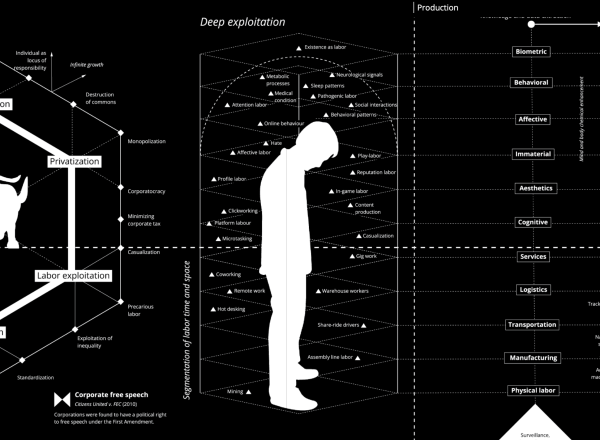
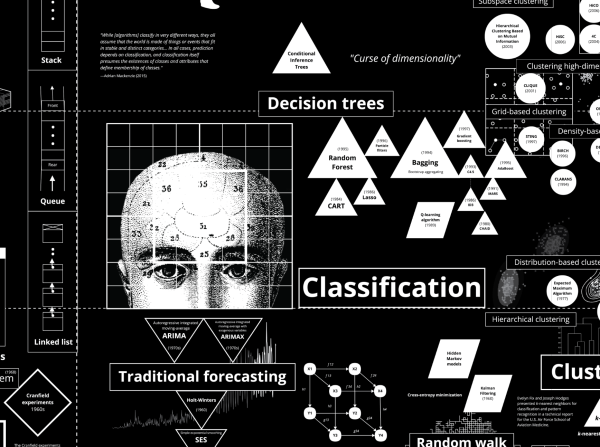
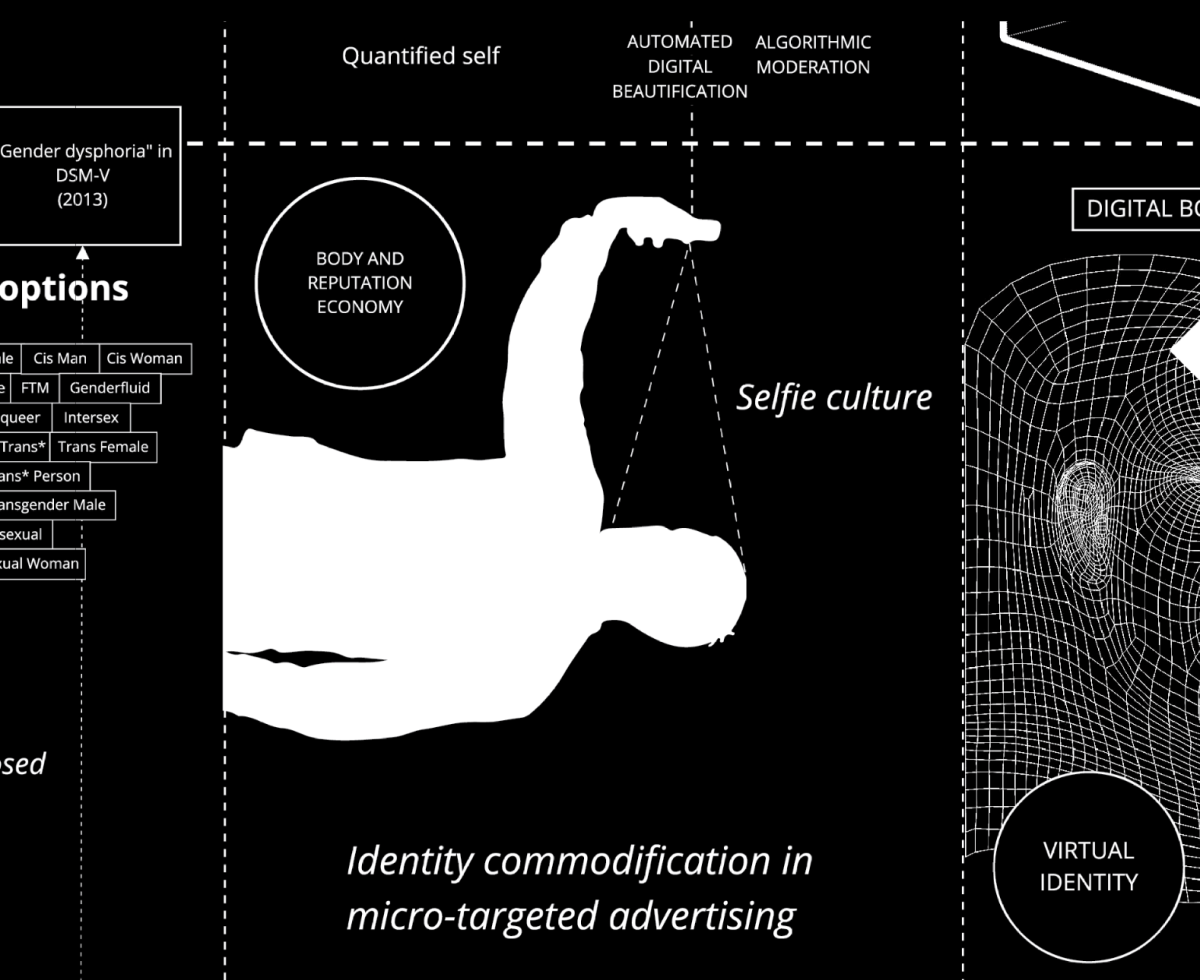
You helped us illustrate this issue with the monumental work Calculating Empires: A Genealogy of Technology and Power Since 1500, by Kate Crawford and Vladan Joler. Can you tell us about it?
For me, this work is a kind of Sistine Chapel of the 21st century. It stands at the intersection of art, science, and critical thinking. Through its graphic scale and its sheer abundance, it embraces the complexity of the world and reminds us of the essentials: Where Do We Come From? What Are We? Where Are We Going? (Paul Gauguin's iconic work).
Calculating Empires transformed raw data into a living fresco. I believe that science—at a time when it is being attacked like never before since the Middle Ages—needs art more than ever to reach people.
Today, AI tends to synthesize, even simplify and "average out" knowledge. In contrast, Calculating Empires visualizes knowledge in all its density. How do you analyze this contrast between the machine's simplification and artistic richness?
It is a tension that confronts us with our responsibility: yes to AI as a lever for productivity, but no to AI as an inventor and decision-maker. For we are beginning to outsource our judgment to the machine, for trivial choices as well as strategic decisions. As Kate Crawford recommends to us: we must now take our time—a radical act in a period of acceleration and simplification.
Illustration :Calculating Empires: A Genealogy of Technology and Power Since 1500 By Kate Crawford and Vladan Joler (2023)