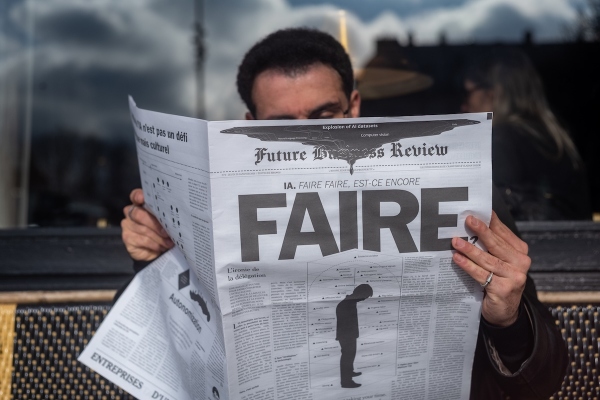
End of the year. The printing presses are churning out annual reports. Leaf through them. Look closely. You will find it. In the CEO's message, in the year's highlights, in the strategic roadmap for the next five years: the reference to artificial intelligence is everywhere.
In many organizations, adopting AI is no longer just a technological choice. It has become a symbolic act: through it, companies and their leaders tell themselves that they belong to the future. But what does this collective ritual say about our managerial cultures? And what does it actually change for those who carry the weight of decision-making?
AI as a rite of passage to the future
In corporate discourse, AI has become a banner. "We are doing AI" is a marker of contemporaneity. This proclamation acts as an initiation rite: it brings leaders into the circle of those who have understood the world to come. In interviews conducted by Eranos in the logistics sector, this dimension appears clearly. AI is seen there as a given, a mandatory step: "Today, saying you don't work with AI is almost professional misconduct."
Yet, nothing is worse than missing out on one's own era. This phenomenon of staging is well known in the social sciences. In the 19th century, one put steam engines on display; in the 1980s, computers; today, algorithms. Behind the technological fascination, a need for validation is at play. Adopting AI is both a way to join the grand narrative of progress and a way to say to an entire ecosystem: "We are part of the world that is moving forward."
The new liturgies of rationality
This ritual rests on an implicit promise: that of regained control. In an economically, geopolitically, and ecologically unstable world, AI appears as a fallback rationality. It promises a reality that is predictable (breakdowns), optimizable (flows), and calculable (risks). Beneath the technical surface, an ancient belief is replayed: that of a world entirely controllable through tools.
Leaders are not naive, but they project onto AI an answer to a deeper crisis: how can one continue to make decisions when uncertainty becomes structural? AI projects then become symbolic mechanisms: they reaffirm the organization's capacity to act and its belief in its own efficiency.
The limits of a ritual without transformation
The problem is not the symbolic aspect of our fascination with AI, but what it hides.
Colossal investments, the creation of dedicated departments, keynote speeches at major trade conventions: the future that is already here is celebrated. But managerial practices, relationships with power, and representations of performance remain largely unchanged. And behind the grand speeches are people in positions of responsibility who are often overwhelmed.
In our study, one executive confided: "We invested massively in AI without changing the management culture. The person who understands AI the least today is our CEO."
In other words: the organization has acquired the symbol, but not yet the meaning. Yet, technology only durably transforms structures when it tackles the collective representations that sustain them.
The real stake: deciding with awareness
AI does not eliminate uncertainty, but it can help us decide alongside it. Before looking at use cases or skills, we must therefore examine the expectations projected onto AI.
In many organizations, it primarily serves as a reducer of managerial anxiety: it promises to clarify ambiguity, to objectify sensitive choices, and sometimes to transfer a share of responsibility to the machine.
Making these beliefs visible allows us to move beyond a magical vision of AI and turn it into a tool for revealing organizational vulnerabilities. This leads to a reassessment of performance: it is no longer about going faster, but about deciding while being aware of the organization's limits.
Mature organizations thus use AI to explore, test scenarios, question their hypotheses, and reveal blind spots. AI does not replace the decision-maker; it strengthens their discernment.
Yet, one must be able to talk about it. A true AI culture is built in spaces for dialogue about actual uses, failures, displaced responsibilities, and the tensions created—including at the top. This is how we move from fascination to conversation.
Towards an ecology of technology
Technical progress is not at fault. It becomes so when it replaces the reflection on meaning. The companies that endure will be those that can articulate engineering & humanities, data & strategy, performance & responsibility. This is what an ecology of technology is: preparing for the future without fetishizing technology.
AI acts as a mirror of our relationship with progress, decision-making, and control. It reveals what organizations truly expect from technology: efficiency, certainly, but also a promise of stability in an uncertain world.
One question remains: are we adopting AI to reassure ourselves, or to transform our way of thinking and acting in the world to come?
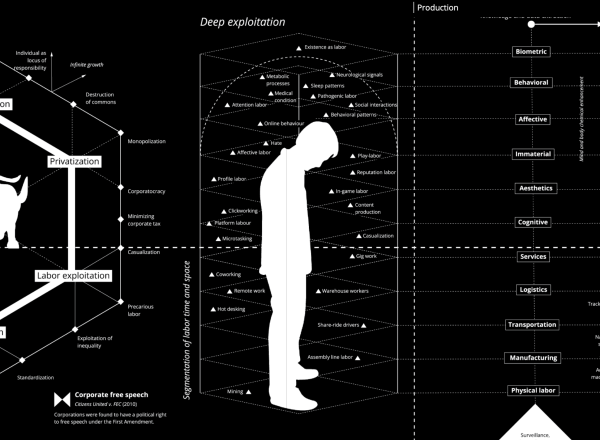
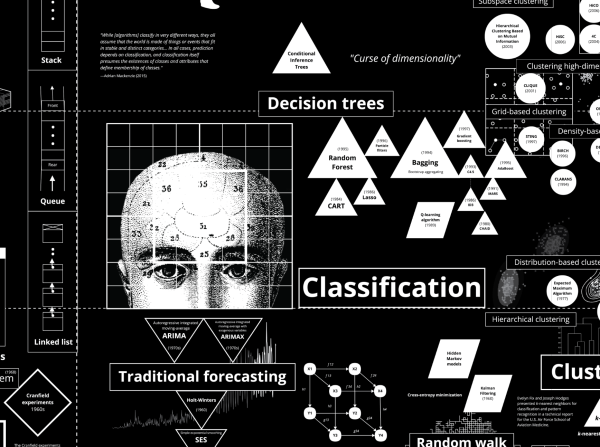
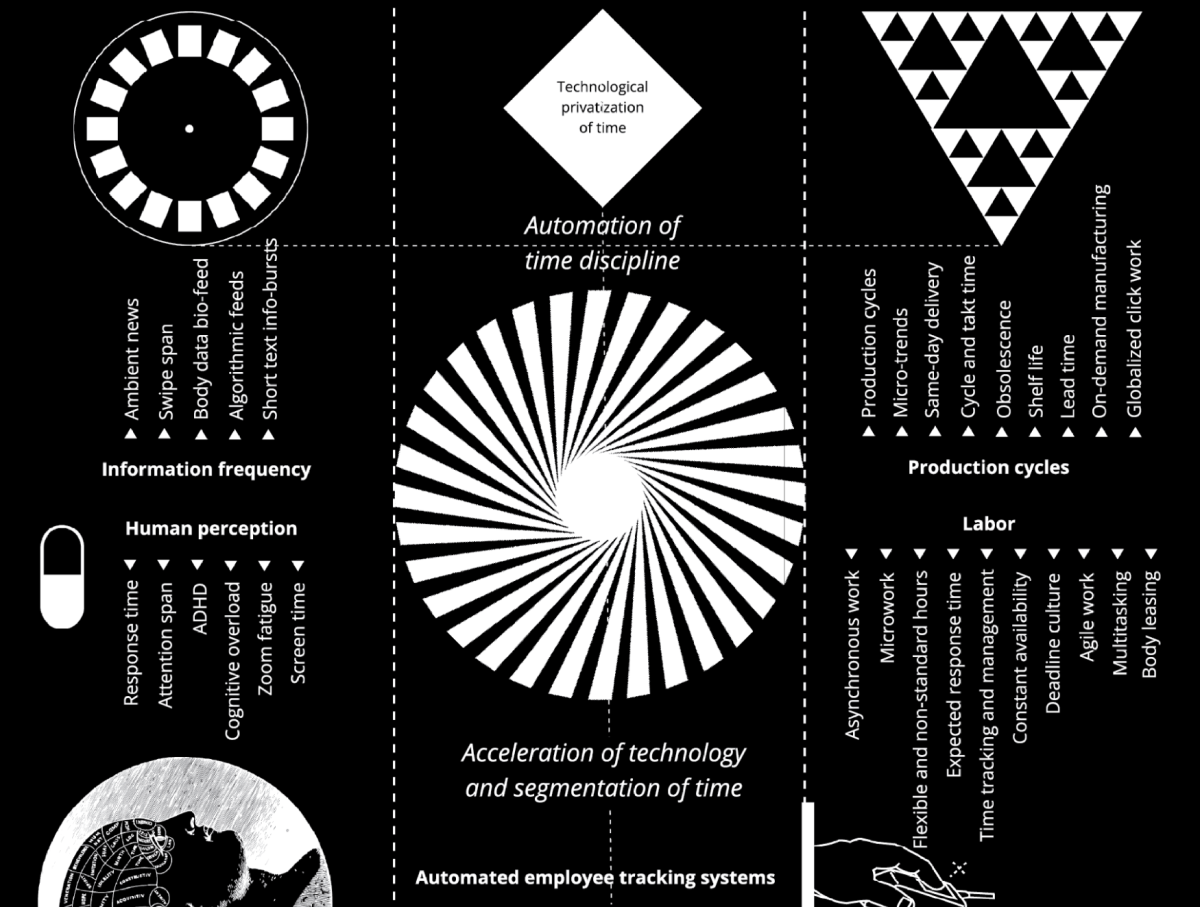
Illustration :Calculating Empires: A Genealogy of Technology and Power Since 1500 By Kate Crawford and Vladan Joler (2023)